
Living in a Miami apartment complex offers convenience, community, and a vibrant lifestyle. But accidents can happen anywhere, even in what feels like the safest environment. Slip-and-fall incidents, faulty balconies, swimming pool mishaps, or even parking lot collisions can lead to injuries that range from minor bruises to serious medical emergencies. In these situations, consulting a Miami personal injury attorney or apartment accident lawyer can make a significant difference in how your case is handled. Knowing what steps to take immediately after an accident can protect your health, your legal rights, and even your financial future.
Whether you’re a long-term resident or just moved into your Miami apartment, understanding your options after an injury is critical. Speaking with an experienced premises liability lawyer in Miami or a qualified injury claim attorney can help you understand who may be responsible and what compensation you may be entitled to. This guide walks you through the steps to take, the emergency contacts to keep on hand, and how local laws affect your rights as a tenant, especially if you plan to file a personal injury claim with a Miami accident lawyer.
Immediate Steps After an Apartment Injury
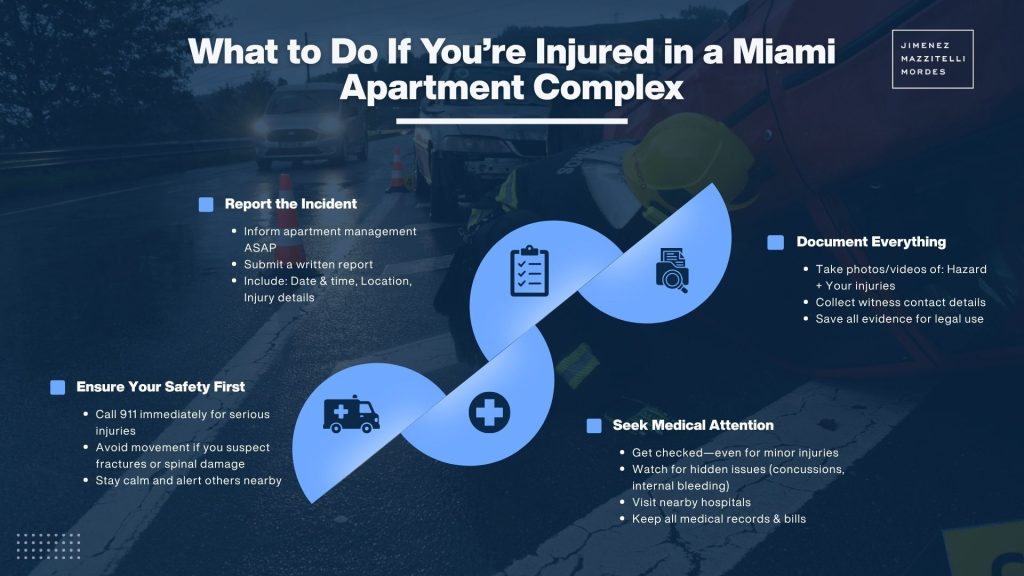
1. Ensure Your Safety First
The priority after any accident is your safety. If the injury is serious, call 911 immediately. Do not try to move yourself if you suspect broken bones or spinal injuries. Staying calm and keeping others around you informed is key.
2. Seek Medical Attention
Even if the injury seems minor, it’s essential to get checked by a healthcare professional. Some injuries, like concussions, internal bleeding, or soft tissue damage, may not be immediately obvious but can worsen over time. Baptist Health South Florida and Jackson Memorial Hospital are nearby medical facilities in Miami that can provide urgent care.
Documenting your medical visit is also crucial for any future insurance or legal claims. Make sure to keep all records, bills, and diagnostic reports.
3. Report the Incident to Your Apartment Management
Most apartment complexes in Miami have procedures for reporting accidents. Notify management or the leasing office as soon as possible, ideally in writing. Include details about the incident, the time it occurred, and any immediate injuries. This report creates an official record and can be important if you need to pursue legal action later.
4. Document Everything
Take photos of the area where the injury occurred, the exact conditions (wet floors, broken railings, uneven surfaces), and any visible injuries. Collect contact information from any witnesses who saw the accident happen. The more evidence you have, the stronger your case if a claim is needed.
Understanding Your Legal Rights in Miami
Florida Premises Liability Laws
In Florida, property owners have a responsibility to maintain safe premises for tenants and visitors. This falls under premises liability law, which can hold apartment complexes accountable for injuries caused by negligence. Examples of negligence include:
- Slippery floors without warning signs
- Broken stair railings or steps
- Poorly maintained swimming pools or recreational areas
- Insufficient lighting in hallways or parking areas
If an apartment complex failed to address known hazards, it may be liable for your medical bills, lost wages, and other damages.
When to Contact an Attorney
If your injury is significant or the apartment management is uncooperative, consulting a Miami personal injury attorney can help. A local attorney understands city-specific ordinances, landlord-tenant laws, and insurance processes. For example, JIMENEZ MAZZITELLI MORDES specializes in helping residents navigate these complex situations while protecting their rights.
Gathering Evidence for Your Case
Proper evidence collection is essential. Here’s what to focus on:
- Photos and videos: Capture the location, hazards, and injury details
- Incident reports: Keep copies of management’s reports
- Medical records: Include doctor notes, prescriptions, and treatment plans
- Witness statements: Names and contact details of anyone who saw the accident
Organizing this information early makes any potential claim or legal process smoother.
Dealing with Insurance
Insurance can be tricky. Your own renter’s insurance may cover some medical costs, while the apartment’s liability insurance could cover damages if negligence is proven. Avoid giving recorded statements to insurance adjusters without consulting an attorney, as these statements may be used to reduce the payout or deny a claim.
Tips for Preventing Apartment Injuries
While accidents can’t always be avoided, some precautions can help reduce risk:
- Watch your step in hallways, stairwells, and common areas
- Report unsafe conditions to management promptly
- Supervise children around pools or playgrounds
- Ensure balconies and railings are secure before use
Maintaining awareness and advocating for safety in your complex can prevent accidents for yourself and your neighbors.
Emergency Contacts for Miami Apartment Residents
Keeping these numbers handy can make a difference in an emergency:
- 911: Immediate medical, fire, or police emergencies
- Miami-Dade Police Department: Non-emergency line – (305) 579-6111
- Jackson Memorial Hospital: (305) 585-1111
- Baptist Health South Florida: (786) 596-2000
- Poison Control: 1-800-222-1222
Having these contacts saved in your phone or posted in a common area can help during critical moments.
Moving Forward After Your Injury
Recovering from an apartment injury involves both physical healing and practical steps to protect your rights:
- Follow all medical advice carefully to ensure a full recovery
- Keep a detailed log of pain, treatment, and any impacts on daily life
- Consult an attorney if the apartment management or insurance company is unresponsive
- Maintain all documentation of your interactions, expenses, and treatments
Taking proactive steps helps you avoid complications and ensures you are prepared if a claim becomes necessary.
Conclusion
Getting injured in a Miami apartment complex can be overwhelming, but knowing your options makes a huge difference. We encourage you to prioritize your safety, document the incident, seek medical care, and understand your legal rights. With the right evidence and guidance from experienced attorneys, we can help you navigate the process confidently.
At JIMENEZ MAZZITELLI MORDES, we provide expert advice and representation for residents facing apartment injuries, making sure your rights are protected while you focus on recovery. If you or a loved one has been injured, we’re here to help—contact us today to schedule a consultation and get personalized legal support for your situation.
Taking the right steps immediately can prevent a small injury from becoming a much larger challenge, and we’ll be with you every step of the way.
Frequently Asked Questions
Do I always need an attorney after an apartment injury?
Not always. For minor injuries, documentation and insurance may be sufficient. However, if negligence is involved or medical bills are high, an attorney can help protect your rights.
How soon should I report an injury to apartment management?
Report it as soon as possible, ideally the same day. Prompt reporting creates an official record that supports your case.
What types of apartment injuries are covered under Florida law?
Slip-and-fall accidents, balcony or stairway failures, swimming pool incidents, and other injuries caused by unsafe conditions can fall under premises liability.
Can I use my renter’s insurance for an apartment injury?
Yes, renter’s insurance may cover certain medical expenses, but liability coverage from the apartment complex could also apply.
What evidence is most important for an injury claim?
Photos, medical records, incident reports, and witness statements are critical to proving negligence and supporting your case.
