
Miami, FL, is famous for its vibrant culture, beautiful beaches, and bustling nightlife. But alongside the excitement comes a challenge that many residents and visitors face daily: traffic. Navigating Miami streets can be tricky, and understanding where and why car accidents happen is crucial for drivers, pedestrians, and anyone concerned about road safety. By knowing the common causes of accidents and the legal implications, residents can better protect themselves. Consulting with a Miami car accident attorney can be essential if an accident occurs, especially in high-risk areas. This article breaks down traffic patterns, accident hotspots, and key trends in Miami, helping you stay informed and aware of potential legal responsibilities after a crash.
The State of Traffic in Miami, FL
Miami’s traffic is a reflection of a fast-growing city. With over 470,000 residents and a metro population exceeding six million, congestion is common during rush hours. The city’s infrastructure is stretched thin, especially on major highways like I-95, I-75, and the Palmetto Expressway (SR-826).
According to the Florida Department of Transportation, Miami consistently ranks among the cities with the highest traffic volumes in the state. Morning commutes typically peak between 7:00 and 9:30 a.m., while evening congestion peaks from 4:30 to 7:00 p.m. On weekends, popular areas like Downtown Miami, Brickell, and Miami Beach experience heavy traffic, particularly during events, festivals, and tourist seasons.
Common Causes of Car Accidents in Miami
Understanding why accidents happen is the first step to preventing them. Miami car accidents often result from:
- Distracted driving: Phones, navigation devices, or other in-car distractions contribute to a significant portion of collisions.
- Speeding: With some highways having higher speed limits, drivers often underestimate stopping distances, especially in congested zones.
- Drunk or impaired driving: Nightlife and tourism increase instances of alcohol-related accidents, particularly in areas like South Beach and Wynwood.
- Weather conditions: Miami experiences frequent rainstorms and occasional flooding, making roads slippery and reducing visibility.
- Aggressive driving: Tailgating, sudden lane changes, and road rage incidents are unfortunately common in high-traffic areas.
Knowing these factors helps drivers stay alert and reduce the likelihood of being involved in an accident.
High-Risk Intersections and Roads
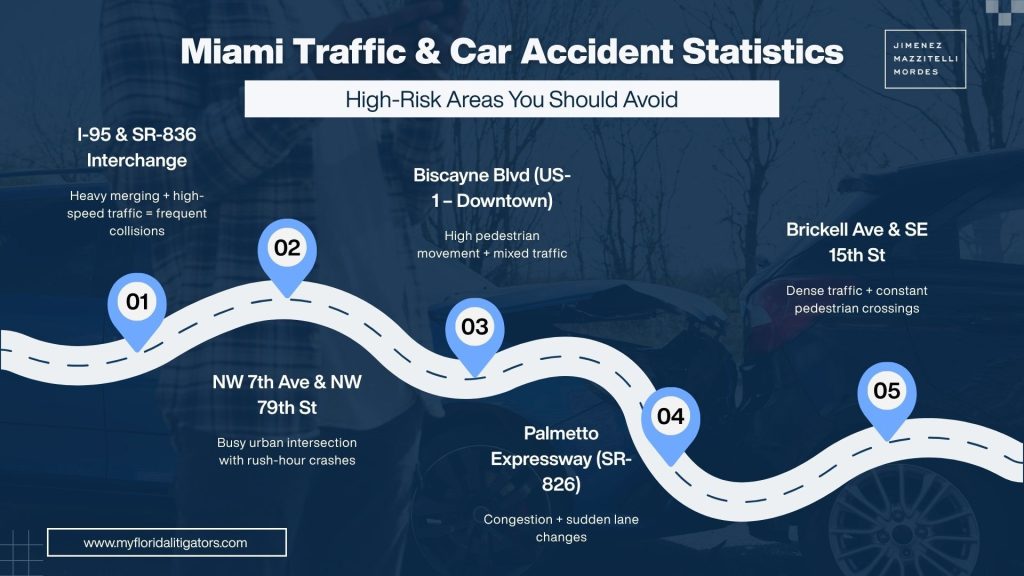
Some intersections and roads in Miami have a higher likelihood of accidents due to traffic volume, complex layouts, or pedestrian activity. Based on crash reports from the Miami-Dade Police Department and city traffic studies, the following areas stand out:
- I-95 and SR-836 (Dolphin Expressway) Interchange: One of the busiest junctions, where high-speed merging and heavy traffic lead to frequent rear-end collisions.
- NW 7th Avenue & NW 79th Street: A hotspot for urban accidents, especially during rush hours.
- US-1 (Biscayne Boulevard) through Downtown Miami: High pedestrian activity and mixed-use traffic increase the risk of collisions.
- Palmetto Expressway (SR-826): Known for accidents during peak travel times, particularly near exits leading to residential areas.
- Brickell Avenue at SE 15th Street: Dense traffic combined with frequent pedestrian crossings creates a higher risk zone.
Visualizing these areas on a map helps drivers plan alternative routes, particularly during peak hours.
Traffic Trends in Miami
Over the past decade, Miami traffic has shown several trends that impact driver safety:
- Increase in vehicle volume: Miami’s growing population and tourism influx have steadily increased traffic, especially in the urban core.
- Rising number of distracted driving incidents: Smartphones and GPS devices have contributed to more rear-end and side-impact collisions.
- Pedestrian and cyclist safety concerns: With Miami promoting walkable areas, pedestrian and bicycle accidents are more common in dense neighborhoods.
- Seasonal fluctuations: Traffic tends to spike during tourist seasons, major events, and spring break, which can coincide with higher accident rates.
- Effect of ride-sharing services: Increased Uber and Lyft activity has added more vehicles on city streets, particularly in South Beach, Downtown, and the airport vicinity.
Miami Car Accident Statistics
Data from the Miami-Dade Police Department and Florida Department of Highway Safety and Motor Vehicles provides insight into accident patterns:
- Total accidents (recent year): Approximately 50,000 reported crashes in Miami-Dade County.
- Injury rates: Roughly 25% of these accidents result in injuries, ranging from minor to severe.
- Fatalities: The county averages 200-250 traffic-related deaths annually.
- Peak times for accidents: Weekdays during morning and evening commutes, and weekend nights around entertainment districts.
- Common accident types: Rear-end collisions, sideswipes, pedestrian-involved accidents, and single-car crashes due to weather or road conditions.
These statistics highlight the importance of vigilance, defensive driving, and awareness of high-risk areas.
Miami Neighborhoods With Higher Accident Rates
Certain neighborhoods report more frequent accidents than others:
- Downtown Miami & Brickell: Dense traffic, corporate offices, and nightlife contribute to high collision rates.
- Little Havana & Wynwood: Narrow streets and heavy pedestrian activity increase accident risks.
- Miami Beach: Tourists unfamiliar with local roads often cause accidents, particularly near Ocean Drive and Collins Avenue.
- West Miami & Kendall: Suburban intersections with high-speed traffic merging from main roads see frequent crashes.
Local authorities are continuously analyzing traffic flow, installing new signals, and creating pedestrian-friendly zones to mitigate these risks.
Maps and Tools to Understand Traffic Risks
Visualizing traffic and accident patterns makes it easier for drivers to anticipate trouble spots. Several tools are available:
- Miami-Dade Open Data Portal: Offers interactive maps showing high-crash intersections and trends.
- Google Maps Traffic Layer: Provides real-time congestion alerts, helping drivers avoid heavy traffic areas.
- Waze: Community-driven alerts for accidents, construction, and road hazards.
- Florida Department of Transportation (FDOT) Crash Data Maps: Detailed historical accident data by road and intersection.
Using these maps can guide safer route planning and reduce accident exposure.
Safety Tips for Miami Drivers
While traffic and accident trends may seem daunting, drivers can take proactive steps to reduce risk:
- Plan your routes: Use real-time navigation apps to avoid congested intersections.
- Drive defensively: Expect sudden stops and lane changes from other drivers.
- Watch out for pedestrians: Areas like Downtown Miami and Miami Beach see high foot traffic.
- Adjust for weather: Rain and occasional flooding require slower speeds and increased following distances.
- Avoid distractions: Keep phones and other devices out of reach while driving.
- Know local laws: Familiarity with Miami traffic regulations can prevent citations and collisions.
Even small adjustments in driving habits can significantly improve safety.
Legal Considerations After a Car Accident in Miami
If you’re involved in a car accident in Miami, understanding your rights and responsibilities is essential:
- Report the accident: Florida law requires certain accidents to be reported to local police, especially those involving injury or significant property damage.
- Document the scene: Take photos, gather witness information, and note the time, location, and conditions.
- Seek medical attention: Even minor injuries can have delayed symptoms.
- Consult a legal professional: Local personal injury attorneys, like those at JIMENEZ MAZZITELLI MORDES, can help you navigate insurance claims and legal responsibilities.
Timely action can protect your rights and ensure proper compensation if injuries or damages occur.
The Role of Infrastructure in Accident Prevention
Miami has made strides in improving road safety:
- Signal upgrades: Modernizing traffic lights and pedestrian signals reduces confusion at busy intersections.
- Road redesigns: Adding turning lanes, better signage, and speed control measures in high-accident areas.
- Pedestrian safety improvements: Crosswalks, speed bumps, and warning signs help protect foot traffic.
- Public awareness campaigns: Education on distracted driving, seatbelt use, and speed limits.
Though challenges remain, continued investment in infrastructure plays a key role in preventing accidents.
Future Trends and Expectations
Looking ahead, Miami may see changes that influence traffic and accidents:
- Increased public transportation use: Expanding Metrorail and bus services could reduce vehicle volume.
- Smart traffic systems: Sensors, adaptive traffic signals, and real-time monitoring may improve flow.
- Electric and autonomous vehicles could change accident patterns and risk factors.
- Urban development: New residential and commercial areas will need careful traffic planning to avoid congestion and accidents.
Staying informed about these trends can help Miami residents adapt and drive safely.
Conclusion
Miami, FL, is a dynamic city with vibrant energy, but traffic and car accidents are a reality that every driver must navigate. Understanding high-risk areas, accident trends, and local traffic laws can make a real difference in safety. By staying alert, planning routes, and practicing defensive driving, residents and visitors can reduce their risk on the road. For those facing legal challenges after an accident, consulting knowledgeable local attorneys, such as JIMENEZ MAZZITELLI MORDES, can ensure your rights are protected and help you recover what you’re entitled to. Staying informed and cautious is the best way to enjoy all that Miami has to offer without unnecessary risks.
Frequently Asked Question
What are the most dangerous intersections in Miami?
Intersections like I-95 & SR-836, NW 7th Avenue & NW 79th Street, and Brickell Avenue & SE 15th Street report higher accident rates due to heavy traffic and complex layouts.
How can I find Miami traffic accident maps?
Miami-Dade Open Data Portal and FDOT Crash Data Maps provide interactive maps and historical accident data.
What time of day are Miami car accidents most common?
Weekday morning (7–9:30 a.m.) and evening (4:30–7 p.m.) rush hours, and weekend nights in entertainment districts.
What should I do immediately after a car accident in Miami?
Report the accident to police if required, document the scene, seek medical care, and contact a legal professional for guidance.
Are pedestrians safe in Miami?
High foot traffic in Downtown Miami, Miami Beach, and Wynwood increases pedestrian accident risk. Drivers should stay vigilant in these areas.
