
If you’ve been involved in a car accident in Miami, FL, getting a clear understanding of what to do next can feel overwhelming. From insurance claims to potential legal matters, one of the first steps is often obtaining your police accident report. These reports document the facts surrounding a crash, providing an official record that can protect your rights and help resolve disputes. Whether your accident was minor or serious, knowing how to file, request, and interpret a Miami police crash report can save time, reduce stress, and help ensure you have the evidence you need.
When injuries are involved, consulting a personal injury attorney can be crucial to understanding your options and protecting your rights. In this guide, we’ll walk through the process in plain language, explain how the Miami Police Department handles accident reports, and give tips for using these reports effectively.
What Is a Miami Police Accident Report?
A police accident report is an official document created by law enforcement officers after responding to a traffic crash. In Miami, FL, these reports are usually prepared by officers from the Miami Police Department (MPD) and include:
- Date, time, and location of the crash
- Identities of drivers, passengers, and witnesses
- Vehicle details (make, model, license plate)
- A description of how the accident occurred
- Statements from involved parties
- Any citations or charges issued
These reports are essential for insurance claims and may be crucial if legal action becomes necessary. Without an official report, proving fault or damages can become much more complicated.
When Is a Police Report Required in Miami?
Not every accident automatically triggers a police report. In Miami, a report is generally required if:
- There are injuries or fatalities
- Property damage exceeds a certain value (typically $500 or more)
- A hit-and-run occurs
- A driver is suspected of impaired driving
Even if your accident is minor, filing a police report can provide an official record that protects you in case disputes arise later.
How to File a Police Report in Miami
Filing a police report in Miami can be done either at the scene or after the fact. Here’s a step-by-step overview:
1. At the Scene
If an officer responds to your crash, they will:
- Gather information from drivers, passengers, and witnesses
- Take photographs of vehicles and the accident scene
- Note any visible injuries
- Record statements about what happened
After the officer completes the investigation, they prepare the official accident report. You will typically receive a report number, which you can use to request a copy later.
2. After the Accident
If the police do not come to the scene, you can still file a report:
- Visit a local Miami Police Department precinct
- Provide details about the crash, including date, time, and location
- Submit any available evidence, like photos or witness statements
Reports filed this way may take longer to process but are just as valid for insurance and legal purposes.
Requesting Your Miami Police Accident Report
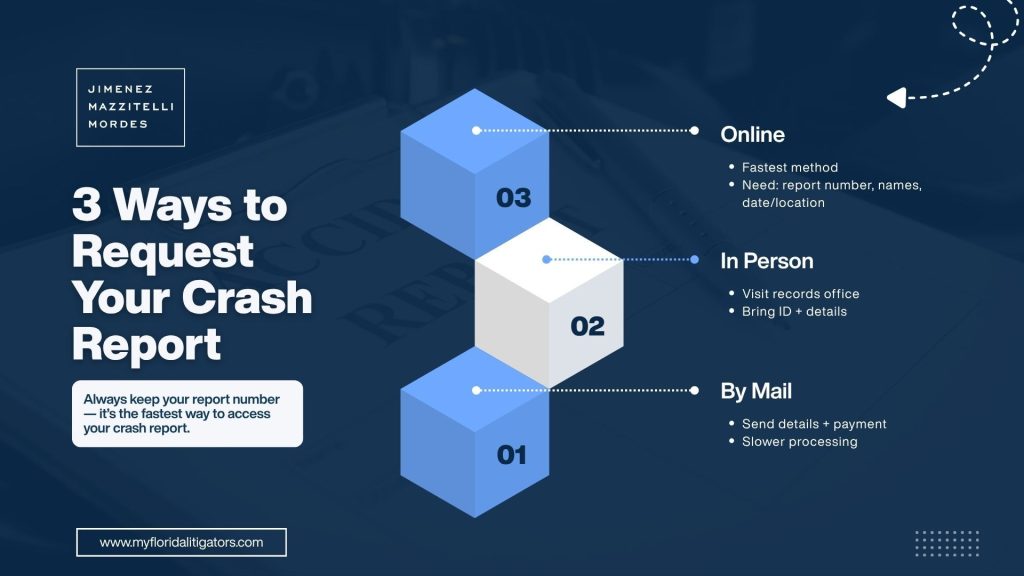
Once a report is filed, you can request a copy. There are a few methods available:
Online Request
The Miami Police Department offers an online portal for accident report requests. You’ll need:
- The report number (if available)
- Names of involved drivers
- Date and location of the crash
- Payment for any applicable fees
Processing times can vary, but online requests are generally faster than in-person visits.
In-Person Request
You can also visit an MPD records office. Bring:
- A government-issued ID
- Report details
- Payment for copies
Staff can help verify the information and provide certified copies if needed.
Mail Request
Some people prefer to submit requests by mail. Include:
- Full contact information
- Accident details
- Payment method
- Any forms required by MPD
Keep in mind that mail requests may take longer to process, especially if the report is recent.
Understanding the Information in Your Report
Accident reports can be dense and filled with technical details. Here’s what to focus on:
1. Identifying Details
Make sure all names, addresses, and vehicle information are correct. Errors here can cause insurance delays.
2. Narrative Section
This portion explains how the officer believes the accident occurred. Read it carefully, and compare it with your recollection of events.
3. Citations and Charges
If anyone was cited for traffic violations, the report will note it. This can affect liability and insurance claims.
4. Witness Statements
Statements from bystanders can support your version of events. If you notice discrepancies, bring them to the attention of your insurance company or attorney.
Using Your Accident Report Effectively
A police report is more than just a piece of paper—it’s a tool for protecting your interests. Here’s how it can help:
- Insurance Claims: Provides proof of the accident, supporting coverage for damages or medical bills.
- Legal Actions: If a lawsuit is necessary, the report serves as an official record of events.
- Dispute Resolution: Helps clarify fault in disagreements with other drivers or insurance companies.
Be sure to keep multiple copies and store them safely. You may need them months or even years after the crash.
Common Issues and How to Handle Them
Even well-prepared reports can have errors or omissions. Common problems include:
- Incorrect driver or vehicle information
- Missing witness statements
- Conflicting descriptions of the crash
If you notice errors:
- Contact the Miami Police Department Records Unit
- Provide evidence or documentation supporting corrections
- Request an updated or amended report
Having an accurate report is crucial, especially if you’re pursuing a personal injury claim.
Additional Resources for Miami Drivers
Being involved in a crash can be stressful, but knowing your options helps. Some additional resources include:
- Miami-Dade County Traffic Court: For citation disputes or hearing information
- Florida Department of Highway Safety and Motor Vehicles: For driver records or license concerns
- Local Personal Injury Attorneys: For guidance on accidents resulting in injuries or complex liability
If your crash resulted in serious injury, speaking with an experienced attorney early can protect your rights and help you navigate the insurance process.
Tips for Filing and Using Your Report
- File as soon as possible—delays can complicate matters
- Document everything at the scene, including photos and witness contacts
- Keep a copy of the report for insurance and legal purposes
- Review the report carefully for errors or missing information
- Consult a professional if your accident involves injuries or significant damages
Conclusion
Navigating the aftermath of a car accident in Miami, FL, doesn’t have to be confusing. Understanding how to file, request, and interpret your police accident report gives you a clear path forward. These reports serve as official documentation that can protect your interests, support insurance claims, and assist legal proceedings if necessary. For anyone dealing with a crash, having the right information and knowing the process can reduce stress and ensure you’re prepared for whatever comes next. JIMENEZ MAZZITELLI MORDES can also guide if you need legal support following a Miami traffic incident.
Frequently Asked Question
How long does it take to get a Miami police accident report?
Most reports are processed within a few days to a few weeks, depending on whether the report was filed at the scene or afterward.
Can I get a copy of my report without the other driver’s information?
Yes, you can request your own copy with your details, but certified copies may require additional verification.
Are police reports mandatory for all Miami car accidents?
Not always. Reports are required when there’s an injury, significant property damage, or a hit-and-run.
How much does it cost to get a Miami accident report?
Fees vary but typically range from $5 to $10 for standard copies, with additional costs for certified copies.
Can I dispute errors in my police report?
Yes, you can contact the Miami Police Department Records Unit to request corrections, providing supporting evidence.
