
If you are navigating the U.S. immigration system, you already know how stressful the process can be. But few things are more frightening than being accused of fraud on your immigration application. A fraud allegation can derail your entire case, lead to a permanent bar from the United States, and even trigger deportation proceedings. Whether the accusation involves a marriage-based green card, an employment visa, or an asylum claim, understanding how USCIS fraud investigations work and knowing how to defend yourself is critical. In this guide, a Miami immigration lawyer breaks down everything you need to know about fraud allegations, how they happen, and the legal strategies that can protect your future.
What Qualifies as Fraud in an Immigration Application?
Under U.S. immigration law, fraud occurs when an applicant willfully misrepresents or conceals a material fact to gain an immigration benefit. The word here is “willfully.” The government must prove that the misrepresentation was intentional, not just a careless error. That said, USCIS and Immigration and Customs Enforcement (ICE) cast a wide net when investigating suspected fraud. Understanding what types of conduct raise red flags can help you avoid problems before they start.
Common Types of Immigration Fraud
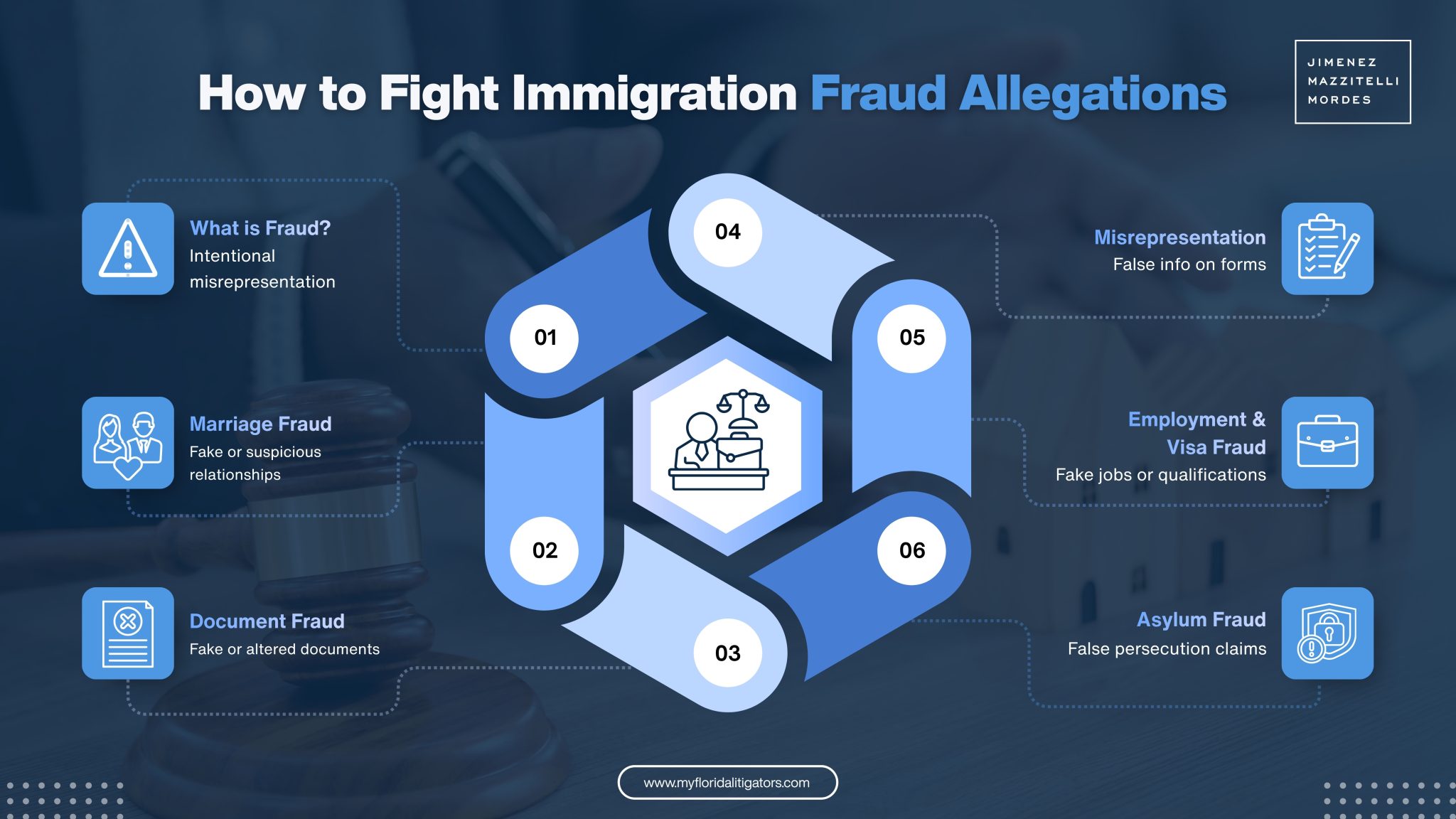
Immigration authorities typically investigate the following categories of suspected fraud.
Marriage Fraud
Marriage-based green card applications receive some of the heaviest scrutiny from USCIS. Officers are trained to identify marriages that were entered solely for the purpose of obtaining immigration benefits. If USCIS suspects your marriage is not genuine, they may investigate further even after your green card has been conditionally approved. Red flags that may trigger a marriage fraud investigation include short courtships before filing, significant age gaps between spouses, inconsistent answers during the couple’s interview, no shared financial accounts or lease agreements, and prior immigration petitions involving other spouses. If USCIS determines that a marriage was fraudulent, both the sponsoring spouse and the applicant can face severe legal consequences, including criminal prosecution under federal law.
Document Fraud
Submitting falsified documents is one of the most straightforward forms of immigration fraud. This includes forged birth certificates, fake employment letters, altered educational transcripts, and counterfeit passports. Even if someone else prepared or provided the fraudulent document on your behalf, you can still be held responsible if USCIS finds it in your application file.
Misrepresentation on Forms
Lying on immigration forms or intentionally leaving out important information is considered material misrepresentation. Common examples include failing to disclose a criminal arrest or conviction, omitting previous immigration violations such as overstays, providing false employment history or job qualifications, and listing incorrect dates of entry or exit from the United States. Even a seemingly minor omission can be treated as fraud if USCIS determines the information would have affected the outcome of your application.
Employment and Visa Fraud
Employment-based visa fraud can involve both employers and employees. Examples include employers creating fictitious job positions to sponsor foreign workers, applicants misrepresenting their qualifications or work experience, companies offering wages that do not reflect actual compensation, and employees working in a different role than what their visa authorizes.
Asylum Fraud
Filing a false asylum claim, fabricating or exaggerating claims of persecution, is taken very seriously by immigration courts and USCIS. If the government determines that an asylum application was fraudulent, the applicant faces not only denial but also potential criminal charges and removal from the country.
What Happens During a USCIS Fraud Investigation?
When USCIS suspects fraud, the agency does not simply deny an application and move on. Fraud allegations trigger a formal investigation process that can have lasting consequences.
How Fraud Investigations Typically Unfold
The investigation process generally follows a pattern. USCIS may initially flag an application for inconsistencies during the standard review. From there, the case may be referred to the USCIS Fraud Detection and National Security Directorate (FDNS) for further examination. Investigators may conduct surprise home visits to verify that married couples are living together, request additional evidence or documentation from the applicant, separate spouses during interviews, compare their answers for inconsistencies, review social media profiles, financial records, and phone records, and contact employers to verify job offers and working conditions.
Possible Outcomes of a Fraud Finding
If USCIS concludes that fraud occurred, the consequences can be severe. These include denial of the pending application, revocation of a previously approved visa or green card, a permanent bar from future immigration benefits under Section 212(a)(6)(C)(i) of the Immigration and Nationality Act, referral for criminal prosecution which can carry penalties of up to five years in federal prison and fines up to $250,000, and initiation of removal (deportation) proceedings. These consequences can follow you for years or permanently, making early intervention with an experienced attorney essential.
Honest Mistakes vs. Intentional Fraud
One of the most important distinctions in immigration fraud cases is the difference between an honest mistake and intentional misrepresentation. Not every error on an immigration application constitutes fraud.
When Errors Are Not Fraud
Many applicants make mistakes on their immigration forms without any intent to deceive. Common situations include language barriers that cause misunderstanding of form questions, reliance on unqualified immigration consultants or “notarios” who fill out forms incorrectly, confusion about dates or addresses due to multiple relocations, and typographical errors in names, birth dates, or case numbers. If you can demonstrate that an error was unintentional and not material to the outcome of your application, an attorney may be able to argue successfully that the mistake does not rise to the level of fraud.
The “Materiality” Standard
For a misrepresentation to be considered fraud, it must be “material,” meaning it would have influenced USCIS’s decision on the application. A small factual error that would not have changed the outcome is less likely to be treated as fraud. However, USCIS officers have broad discretion, and what seems minor to an applicant may be viewed differently by the government.
Legal Defenses Against Immigration Fraud Allegations
Being accused of fraud does not mean your case is over. There are several defense strategies that an experienced attorney can pursue on your behalf.
Proving the Legitimacy of Your Application
In marriage fraud cases, the most effective defense is demonstrating that the relationship is genuine. This involves presenting evidence such as joint bank accounts and shared financial responsibilities, a shared lease or mortgage, photographs documenting the relationship over time, communications (texts, emails, video calls) showing an ongoing relationship, testimony from friends, family members, and community members who know the couple, and evidence of children born to the marriage. For employment-based fraud allegations, the defense may involve providing detailed documentation of job duties, pay stubs, tax records, and employer verification.
Challenging the Government’s Evidence
In many fraud cases, USCIS relies on circumstantial evidence, things that look suspicious but do not conclusively prove fraud. A skilled attorney can identify weaknesses in the government’s case, including inconsistencies in the investigator’s report, interview notes that were inaccurately recorded, evidence that was taken out of context, and procedural errors during the investigation.
Filing for Waivers
If fraud is found, certain applicants may be eligible for an I-601 waiver. This waiver allows individuals who are otherwise inadmissible due to fraud or misrepresentation to seek forgiveness if they can demonstrate that denying their application would cause extreme hardship to a qualifying U.S. citizen or lawful permanent resident relative. The I-601 waiver process is complex and requires substantial documentation, including evidence of the qualifying relative’s medical conditions, financial dependence, emotional hardship, and other factors. An experienced attorney is essential for building a strong waiver application.
Steps to Take If You Are Accused of Immigration Fraud
If you receive notice that your application is under investigation or that fraud has been alleged, taking the right steps immediately can make a significant difference in the outcome of your case.
Do Not Ignore the Allegation
Failing to respond to a fraud allegation will not make it go away. USCIS will proceed with a decision, usually a denial, whether or not you respond. Ignoring the situation can also result in automatic referral to immigration court for removal proceedings.
Do Not Make Additional Statements Without Legal Counsel
Anything you say to USCIS, ICE, or any government agency can be used against you. Before responding to questions, attending interviews, or submitting additional documents, consult with an attorney who can advise you on how to protect your rights.
Gather Supporting Documentation
Start collecting any evidence that supports the legitimacy of your application. For marriage cases, this includes shared financial documents, photographs, and communications. For employment cases, gather pay stubs, tax returns, and employment contracts. The more organized and comprehensive your evidence, the stronger your defense will be.
Contact an Attorney Immediately
Fraud allegations are among the most serious issues in immigration law. The sooner you engage legal representation, the better your chances of a favorable outcome. An attorney can review the government’s evidence, prepare you for interviews, file motions or appeals, and negotiate on your behalf.
How Jimenez Mazzitelli Mordes Can Help
At JIMENEZ MAZZITELLI MORDES, we have experience defending clients against all types of immigration fraud allegations in Miami and throughout South Florida. Our team understands how USCIS fraud investigations work, what evidence the government looks for, and how to build a defense that protects your rights and your future. We assist clients with marriage fraud defense and interview preparation, responding to USCIS Notices of Intent to Deny (NOIDs) and Requests for Evidence (RFEs), I-601 waiver applications for fraud-related inadmissibility, representation in immigration court during removal proceedings, and appeals to the Board of Immigration Appeals (BIA) for wrongly denied cases. If you are facing fraud allegations in your immigration case, do not wait. Contact JIMENEZ MAZZITELLI MORDES today to schedule a consultation and get the legal help you need.
